
Blog

I’m Chartered – now what?

Achieving Chartered Engineer status is a career milestone.  You’re recognised as attaining a certain level of professional competence and commitment to the discipline.  But like all milestones, it’s just a marker on the journey not the destination.  Excelling as an engineer requires a lifelong commitment to learning and developing your competence and skills.  So here are some thoughts on a what a few next steps might look like:

  1. Find a mentor.  It’s always useful to have a mentoring relationship (formal or informal) with at least one other experienced engineer, whom you trust and respect, and can continue to learn from.
  2. Keep learning.  Competence is completely dependent on your knowledge and how you apply that knowledge through practice.  How do you gain and apply new knowledge?  One way is to continue studying the subject – don’t just rely on quick answers through internet search engines – read some books!  I’ll post some recommendations for your bookshelf.
  3. Make presentations. Find opportunities to present things you’ve worked on or are working on. Lunch and learns, local IChemE branch events, management presentations, guest lectures at your alma mater….all help you reflect on what you’ve learned, reinforcing the knowledge and giving you fresh insights as you try and communicate those concepts clearly to others.
  4. Solve a problem.  There are all sorts of opportunities lurking in the place you work to solve problems that either, no-one else has noticed or others have tried and failed. Find something and work on it.  And importantly write it up – you’ll find the act of writing will help you think through the problem, ask more questions and lead you to dig deeper to get a solution.
The Danger of “Remote Misses”

The term “near miss” was coined by J.T. MacCurdy in a book called The Structure of Morale.  He was a Canadian psychiatrist describing how a population subject to bombing, like the London Blitz, comprise three groups of people.  1 – the people killed, 2 – the near misses, and 3 – the remote misses.  The near misses survive but are deeply impressed or traumatised by the experience psychologically.  They aren’t injured but they’ve witnessed destruction first hand and experienced the horrors.  The remote misses are those people who hear the bombs exploding and the sirens wailing but they aren’t caught up in the bombing event itself – it’s in the next street or further away.  This group of people respond in the completely opposite way to the near-misses.  MacCurdy describes their experience as  “a feeling of excitement with a flavour of invulnerability.”  The more times this latter group are exposed to remote misses, the more invincible they believe themselves to be.

It’s curious that we’ve adopted the term near misses for a category of safety events in the process industries. These are unplanned events that have the potential to cause, but do not actually result in harm to humans, or damage to the environment or equipment.  But what of the majority of us – the people on site, but particularly engineers and managers working remotely from where the events occur?  Are these events near misses, or are they in actual fact experienced as remote misses?  And if the latter, what effect does this have on the organisation at large in how it thinks about its vulnerability to one of these events becoming much more serious?

Hydrocarbon Releases

Lord Cullen’s two volume report of the Public Inquiry into the Piper Alpha Disaster is available through the HSE’s website and it’s well worth taking the time to read.

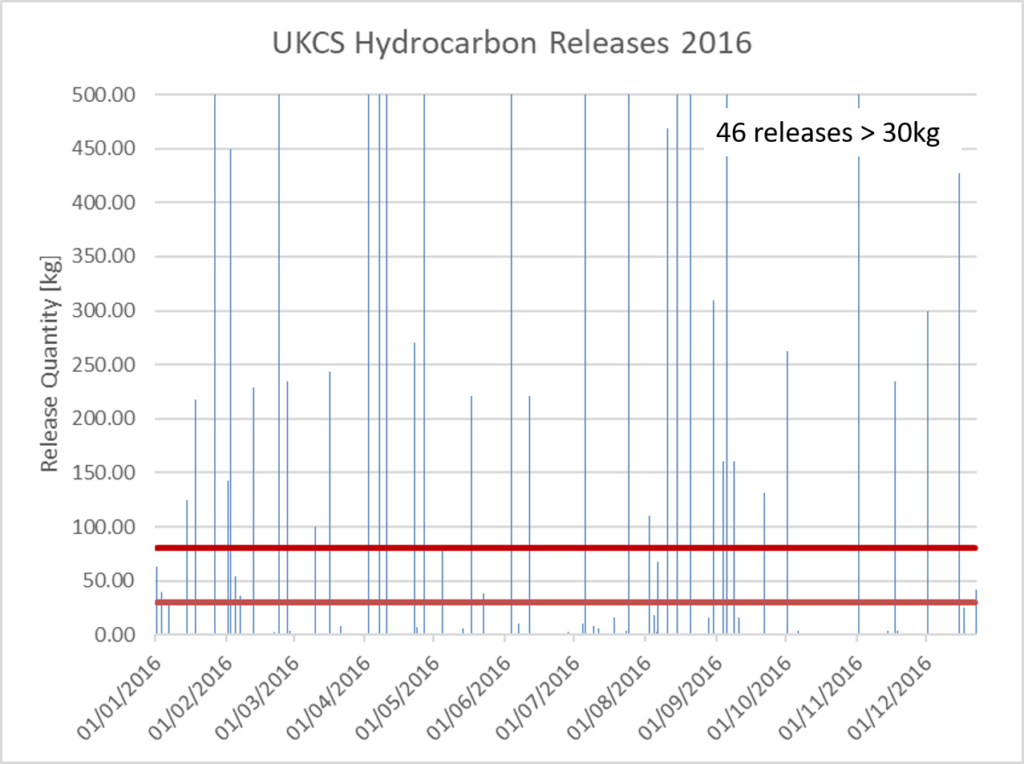
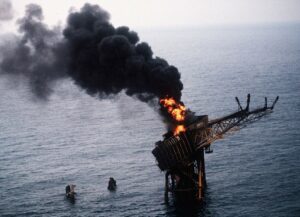
It’s astonishing how an initial hydrocarbon release of between 30 and 80 kg escalated to 167 fatalities on 6 July 1988.  Unfortunately, there are still releases of this magnitude (and greater) happening in the offshore industry today.  Data for 2016 published by the Health & Safety Executive contains 46 hydrocarbon releases of more than 30 kg.  Whilst other protective measures are clearly functioning to prevent these from escalating beyond a loss of containment – it is always much safer to prevent the releases occurring in the first place.

Each of these releases provides an opportunity to understand what went wrong and to prevent it happening again.