
Are we now heading to a world in which you are no longer able as a professional engineer to weigh up the evidence, assess the risks and then take appropriate actions which make most efficient use of resources?
It seems that way.
I’m increasingly disturbed by the adoption of Climate Change alarmism in defining what I can and can’t do as a professional engineer.
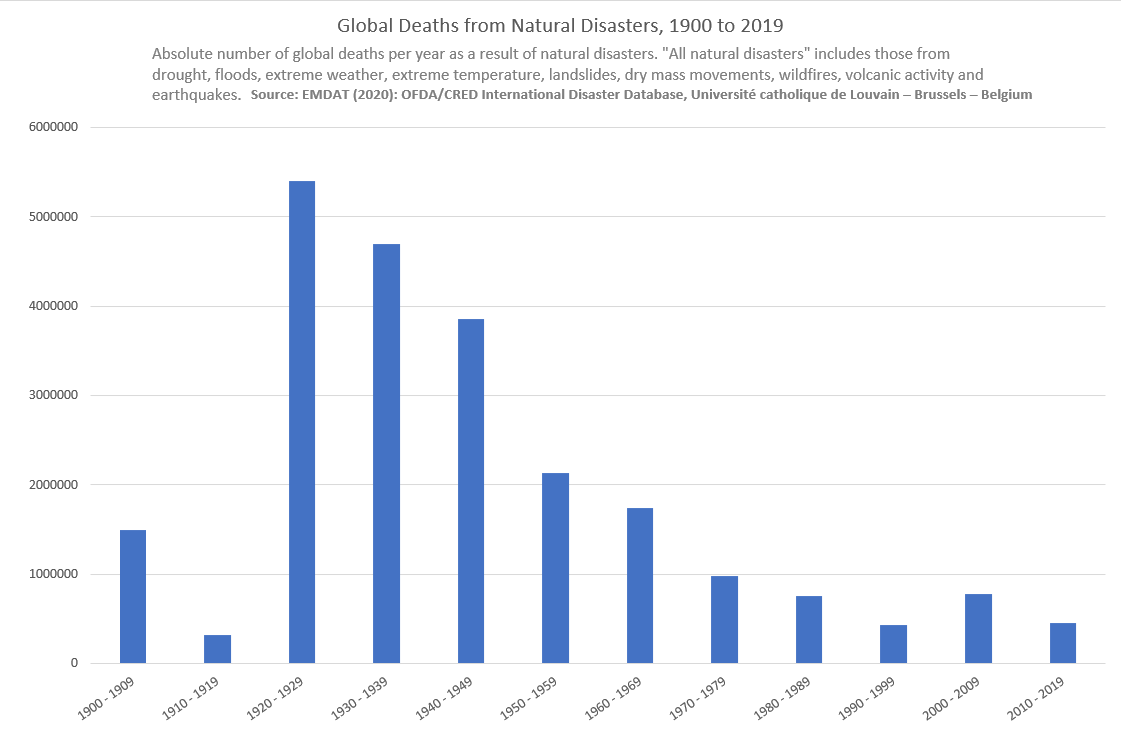
There has been a wholesale and headlong plunge into Net Zero based on catastrophising about the implications of a 1.5°C increase in global mean temperature. Common sense and engineering principles are being dispensed with in favour of what amounts to fantasy and doomsday thinking. Millions of people aren’t going to die from climate change. The number of deaths from natural disasters has decreased in the last century despite rising levels of carbon dioxide and global mean temperature increases.
Where is the evidence that there is a climate emergency? On what basis does reducing carbon dioxide emissions make for the best solution to tackling economic poverty? What are the real benefits of Net Zero and to whom do they accrue? In the list of sustainable goals defined by the UN is climate change really the most pressing problem or would we be better tackling economic growth in the developing world by providing access to cheap high density energy?
As an engineer I am bound by a code of professional conduct:
Members when discharging their professional duties shall act with competence and integrity, in the public interest, and shall exercise all reasonable professional skill and care to: (a) Professional competence (i)Prevent avoidable danger to health or safety (ii) Prevent avoidable adverse impact on the environment.
(Code of Professional Conduct and Disciplinary Regulations Issue V: 2015 IChemE)
At the minute this leaves room to define the problem accurately, establish the options, assess those options against criteria (societal, health, safety, environment and economic), and then decide upon the optimal course of action. Changing a professional code of conduct to align with a specific solution to an ill-defined problem is wrong-headed.
There needs to be a better informed debate about this whole subject and how best to define and tackle the problems. A couple of good places to start:
https://environmentalprogress.org/